
AI as a Key Enabler of the UAE’s Net Zero 2050 Strategy
The United Arab Emirates (UAE) has emerged as a global leader in climate action through its Net Zero by 2050 Strategic Initiative, a comprehensive framework aimed at reducing greenhouse gas emissions and transitioning toward a decarbonized and sustainable economy.
This initiative spans multiple domains, including clean energy, sustainable infrastructure, industrial transformation, and responsible consumption. Central to this transition is Artificial Intelligence (AI), a rapidly advancing technology that enables real-time decision-making, system optimization, and large-scale environmental monitoring. Beyond automation, AI has become a strategic tool supporting emissions reduction, energy efficiency, and evidence-based policymaking across the UAE’s economy.
AI for Energy Optimization and Efficiency
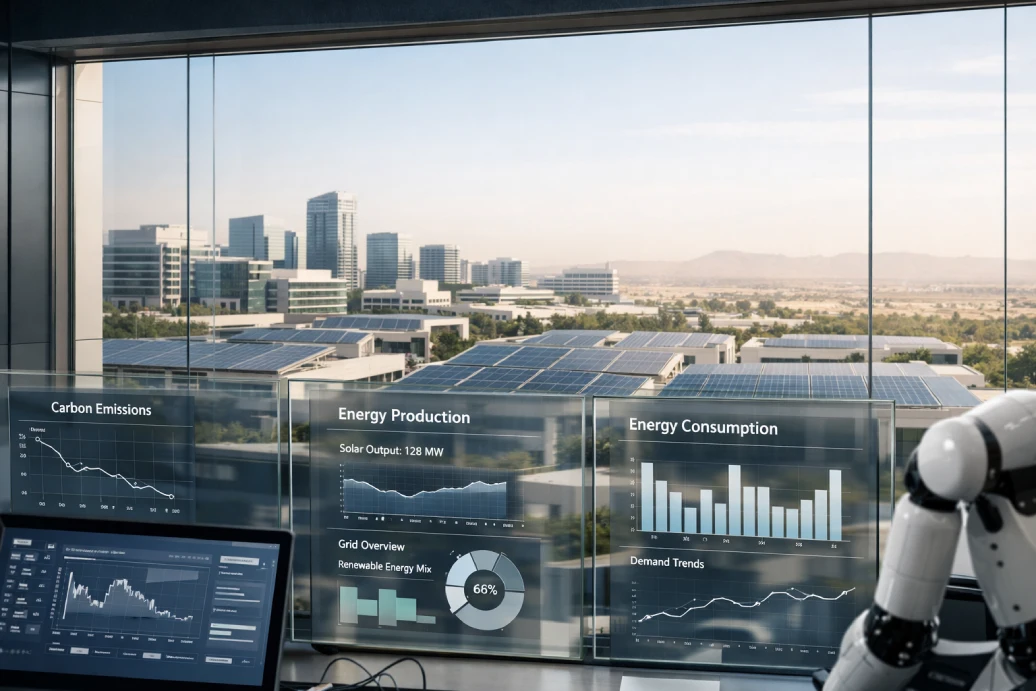
Decarbonizing the energy sector is a cornerstone of the UAE’s Net Zero 2050 strategy. AI plays a critical role by enhancing renewable energy integration and improving operational efficiency across energy systems. AI tools forecast solar and wind patterns, helping operators balance supply and reduce energy waste. This capability is particularly vital as solar power rapidly expands across the UAE (Kanodia, 2025). AI monitors energy use in smart and micro-grids, optimizing distribution for large-scale projects. In addition, national energy companies are using AI to optimize asset performance in oil and gas operations, resulting in improved efficiency and measurable reductions in carbon emissions (Ibrahim, 2025).
Real-Time Emissions Monitoring and Environmental Analytics
AI-driven analytics have transformed how environmental data is collected, analysed, and applied. Advanced AI systems now enable real-time monitoring of carbon emissions, air quality, and climate risks, significantly improving transparency and regulatory oversight. Government agencies can assess progress toward Net Zero targets more frequently and accurately than through traditional reporting mechanisms (Ibrahim, 2025). AI-enabled sensor networks deployed across cities such as Dubai and Abu Dhabi continuously analyse air quality and predict pollution trends. This allows authorities to take proactive measures to mitigate environmental risks before critical thresholds are reached (Kanodia, 2025). Furthermore, AI-based climate models help forecast extreme weather and heat risks, supporting resilient infrastructure planning.
AI in Sustainable Infrastructure and Smart Cities
AI is also deeply embedded in the UAE’s smart city vision. Urban sustainability initiatives use AI to optimize traffic flows, reduce congestion-related emissions, and improve water and energy management. AI-enabled buildings dynamically regulate heating, cooling, and lighting based on occupancy and weather conditions, significantly reducing energy consumption and carbon footprints (Kanodia, 2025). Through intelligent urban planning and infrastructure management, AI contributes to lowering operational costs while embedding sustainability into everyday urban life. These innovations align with the UAE’s vision for smart and sustainable cities.
Collaborations, Research, and Institutional Support
The UAE’s success in leveraging AI for sustainability is reinforced by strong institutional support and strategic partnerships. The Ministry of Climate Change and Environment has collaborated with global technology firms such as IBM to co-develop AI-driven solutions that support climate and sustainability goals (Benamara, 2025). Academic institutions, especially MBZUAI, drive AI research for decarbonization, energy efficiency, and climate resilience (MBZUAI, 2023). International partnerships with organizations such as the United Nations Development Programme (UNDP) align AI innovation with the Sustainable Development Goals, reinforcing evidence-based policymaking and global cooperation (UNDP, 2025).
Challenges and Ethical Considerations
Despite its benefits, AI deployment raises important challenges. Large-scale AI models and data centres consume substantial energy, potentially offsetting environmental gains if not powered by renewable sources. Additionally, effective AI solutions depend on high-quality data and robust governance frameworks to ensure transparency, fairness, and public trust. Experts also caution against excessive reliance on automated systems without adequate human oversight, particularly in complex environmental and social decision-making contexts (Ibrahim, 2025). Addressing these challenges through responsible AI frameworks and renewable-powered digital infrastructure is essential for ensuring AI remains a positive force in the Net Zero transition.
Conclusion
AI has emerged as a key enabler of the UAE’s Net Zero 2050 Strategy, supporting cleaner energy systems, real-time emissions monitoring, sustainable urban development, and smarter climate governance. Through strategic partnerships, research investment, and strong national vision, the UAE demonstrates how technological innovation can align with environmental responsibility. As AI continues to evolve, it will remain integral to achieving the UAE’s climate ambitions—helping shape a future that is technologically advanced, economically resilient, and environmentally sustainable.
References
- Kanodia, A. (2025). AI and sustainability: How the UAE is using AI to tackle climate change. WDCS Technology. https://www.wdcstechnology.ae/ai-and-sustainability-how-the-uae-is-using-ai-to-tackle-climate-change
- Ibrahim, M. (2025). UAE taps artificial intelligence to power sustainability and climate action. Aletihad Newspaper. https://en.aletihad.ae/news/uae/4606882/uae-taps-artificial-intelligence-to-power-sustainability-and
- Benamara, A. (2025). UAE ministry of climate change and environment partners with IBM to advance AI-driven sustainability. TechAfrica News. https://techafricanews.com/2025/10/20/uae-ministry-of-climate-change-and-environment-partners-with-ibm-to-advance-ai-driven-sustainability/
- Mbzuai. (2023). MBZUAI. https://mbzuai.ac.ae/news/ai-research-and-development-central-to-uaes-economic-diversification-sustainable-growth-and-global-competitiveness-strategy-cop28-president-designate/
- UNDP (2025). UNDP and UICCA join hands to harness the power of Artificial Intelligence to advance progress towards achieving the Sustainable Development Goals. https://www.undp.org/arab-states/press-releases/undp-and-uicca-join-hands-harness-power-artificial-intelligence-advance-progress-towards-achieving-sustainable-development
- DEWA. (2025). UAE leads energy and AI integration to build smart and sustainable cities of the future. https://www.dewa.gov.ae/en/about-us/media-publications/latest-news/2025/12/uae-leads-energy-and-ai-integration