
Global Business Perspectives
Discover international and cross-cultural business insights in Horizon University College’s Knowledge Update to stay informed on global business trends.
Super User
From Different Corners
London, Dec 16 (IANS) Imagine your child controlling toys with his/her brain while you get busy with home chores. According to researchers from the University of Warwick in Britain, next generation toys controlled with the power of thoughts can become must have gifts in the near future.
Led by Professor Christopher James, the team has developed a technology which allows electronic devices to be activated using electrical impulses from brain waves, by connecting our thoughts to computerised systems.
The research connects the human mind with electronic devices and sensors in headsets receive brain waves and feed them into electrical circuits.
As a result, remote-controlled cars and toy robots could be activated with kids' levels of concentration like thinking of his/her favourite colour or stroking your dog.
Instead of a hand-held controller, the headset is used to create a brain-computer interface. This activity is then processed by a computer, amplified and fed into the electrical circuit of the electronic toy.
"While brain-computer interfaces already exist, their functionality has been quite limited. New research is making the headsets now read cleaner and stronger signals than ever before - this means stronger links to the toy, game or action thus making it a very immersive experience," James explained in a university statement.
The exciting bit is what comes next -- how long before we start unlocking the front door or answering the phone through brain-computer interfaces, the researchers noted.
Super User
From Different Corners
New York, Dec 16 (IANS) Researchers have identified that a blood serum test for two specific antibodies of human papillomavirus may act as a potential biomarker to predict the relapse of a type of throat cancer.
Oropharyngeal cancer -- which occurs in the throat, tonsils and back of the tongue -- is frequently linked to the human papilloma virus -- an infection that causes warts in various parts of the body.
Although HPV-related cancers are generally more responsive to treatment, for nearly 15 to 20 per cent of patients, the treatment won't work and their cancer is likely to relapse.
The study found that the patients whose HPV-fueled oropharyngeal cancer recurred had higher levels of antibodies for two proteins -- E6 and E7.
The presence of these antibodies in blood serum can be a reliable indicator of five-year head and neck cancer survival, the researchers said.
"If we can monitor someone through blood markers, then instead of a patient coming for a clinic visit every two to three months, they could get blood drawn near home. If there's evidence of high E7, we can tell the patient to come in for more evaluation," said Matthew E. Spector, Assistant Professor at the University of Michigan in the US.
For the study, the team examined blood serum samples of 52 patients with advanced oropharyngeal cancer, of which 22 developed recurrence and 30 did not.
The analysis revealed that recurrent patients had significantly higher E6 and E7 serum antibody levels than the non-recurrent patients over the follow-up period.
Patients who recurred had a lower clearance of E7 antibody than patients who remained disease free.
The study was published in the journal Clinical Cancer Research.
Super User
From Different Corners
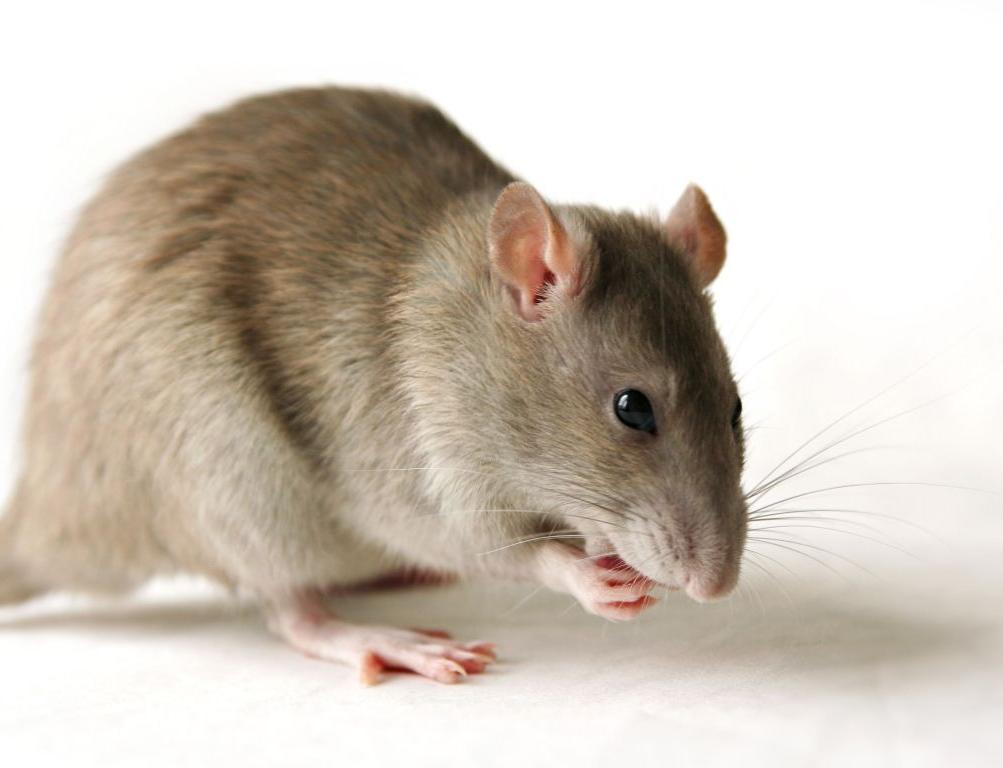
US researchers have successfully reversed the hallmarks of ageing in mice using a technique called cellular reprogramming.
Super User
From Different Corners
Toronto, Dec 16 (IANS) With the help of a new method, researchers can detect roughly 10 black holes per year -- doubling the number currently known within two years -- and unlock their history in a little more than a decade.
"Within the next 10 years, there will be sufficient accumulated data on enough black holes that researchers can statistically analyse their properties as a population," said Avery Broderick, Professor at University of Waterloo.
"This information will allow us to study stellar mass black holes at various stages that often extend billions of years," added Broderick.
The researchers came up with the method that has implications for the emerging field of gravitational wave astronomy and the way in which we search for black holes and other dark objects in space.
"We do not yet know how rare these events are and how many black holes are generally distributed across the galaxy," said Broderick, adding that "for the first time, we will be placing all the amazing dynamical physics that Laser Interferometer Gravitational-Wave Observatory (LIGO) sees into a larger astronomical context."
The study, published in The Astrophysical Journal, proposes a bolder approach to detect and study black holes not as single entities but in large numbers as a system by combining two standard astrophysical tools in use today -- microlensing and radio wave interferometry.
Although very little is known about the inner workings of black holes, the integral part they play in the lifecycle of stars and regulate the growth of galaxies is known.
Earlier this year, LIGO presented the first direct proof of the existence of black holes when it detected gravitational waves from the collision of two black holes merging into one.
When a dark object, such as a black hole, passes between us and another light source, gravitational microlensing occurs.
The researchers proposed using radio waves to take multiple snapshots of the microlensing event in real time.
"When you look at the same event using a radio telescope -- interferometry -- you can actually resolve more than one image. That is what gives us the power to extract all kinds of parameters, like the object's mass, distance and velocity," noted Mansour Karami, doctoral student University of Waterloo.
Super User
From Different Corners
New York, Dec 16 (IANS) A new planetary system has been discovered with a host star similar to the Earth's Sun but its unusual composition indicates that it has 'eaten' some of its planets.
The study that was published in the journal "Astronomy and Astrophysics" suggest that this new discovery can provide clues to researchers about how planetary systems evolve over time.
"It does not mean that the Sun will 'eat' the Earth any time soon," said Jacob Bean, Assistant Professor University of Chicago.
However, "our discovery provides an indication that violent histories may be common for planetary systems, including our own" Bean said.
In 1995, astronomers discovered the first planet orbiting a star other than the sun.
Two thousand exoplanets were identified since then including some rare planets that orbit a star similar to Earth's Sun.
Researchers at University of Chicago studied star HIP68468, which is 300 light years away, as part of a multi-year project to discover planets that orbit solar twins.
"It is tricky to draw conclusions from a single system to study more stars like this to see whether this is a common outcome of the planet formation process," cautioned Megan Bedell, co-author of the study.
The researchers said that the study of HIP68468 was a post-mortem of this process happening around another star similar to our sun and that the discovery deepened their understanding of the evolution of planetary systems.
"HIP68468's composition points to a history of ingesting planets. It contains four times more lithium than would be expected for a star that is six billion years old, as well as a surplus of refractory elements -- metals resistant to heat that are abundant in rocky planets," the research found.
Scientists used the 3.6-meter telescope at La Silla Observatory in Chile to discover their first exoplanet in 2015.
"The more recent discovery needs to be confirmed, but includes two planet candidates -- a super Neptune and a super Earth. Their orbits are surprisingly close to their host star, with one 50 per cent more massive than Neptune and located at a Venus-like distance from its star.
"The other, the first super Earth around a solar twin, is three times the Earth's mass and so close to its star that its orbit takes just three days," the study noted.
The scientists said that these two planets most likely did not form where they see them today.
"Instead, they probably migrated inward from the outer parts of the planetary system. Other planets could have been ejected from the system -- or ingested by their host star," the researchers added.
Researchers continue to explore more than 60 solar twins, eyeing for more exoplanets.
Super User
From Different Corners
New York, Dec 16 (IANS) Using the internet in classrooms for study purposes, is likely to affect academic performance, even among the most intelligent and motivated of students, researchers warned.
When internet is used in classrooms, students tend to spend most of their time on social media, reading email, shopping for items such as clothes or watching videos, that could lead to poorer scores.
Internet's use was a significant predictor of students' final exam score, even when their intelligence and motivation were taken into account, said lead author Susan Ravizza, Associate Professor Michigan State University in the US.
"The detrimental relationship associated with non-academic internet use raises questions about the policy of encouraging students to bring their laptops to class when they are unnecessary for class use," Ravizza said.
Previous research has shown that taking notes on a laptop is not as beneficial for learning as writing notes by hand.
"Once students crack their laptop open, it is probably tempting to do other sorts of internet-based tasks that are not class-relevant," Ravizza added.
For the study, the team studied internet use on laptop in a one-hour lecture course with 127 students.
The study showed that using the internet for class purposes did not help students' test scores.
The findings are forthcoming in the journal Psychological Science.
Super User
From Different Corners
Mumbai, Dec 15 (IANS) A study by Indian researchers suggests that a population of neutron stars can generate gravitational waves continuously, a finding that could provide an opportunity to study these waves almost permanently.
The study by Professor Sudip Bhattacharyya of the Tata Institute of Fundamental Research (TIFR), Mumbai, and Professor Deepto Chakrabarty of the Massachusetts Institute of Technology (MIT) in the US found that a population of neutron stars should spin around their axes much faster than the highest observed spin rate of any neutron star.
The observed lower spin rates are possible if these neutron stars emit gravitational waves continuously, and hence spin down, the researchers said.
Gravitational waves emitted by massive objects is a prediction of Albert Einstein's general theory of relativity, which has recently been discovered during transient phenomena of black hole mergers.
But the detection of continuous gravitational waves, which could provide an opportunity to study these waves almost permanently, is still elusive.
Neutron stars are the densest observable objects in the universe, with a fistful of stellar material outweighing a mountain on Earth.
While such stars are not bigger than a city, in size, they have more material than in the Sun crammed inside them.
A population of these stars can increase their spin rate by the transfer of matter from a normal companion star.
In fact, some of them have been observed to spin several hundred times in a second around their own axes.
In the 1970s, it was theoretically worked out how fast these neutron stars could spin, and since then this has formed the basis of studies of these stars.
But the new study -- published in the The Astrophysical Journal -- showed that for episodic mass transfer, which happens for many neutron stars, the stellar spin rate should be much higher, and the star could easily attain a spin rate more than a thousand times per second.
Since no neutron star has been observed with such a high spin rate, the team pointed out that many of these stars are likely to be slowed down by continuously emitting gravitational waves.
The new study provides a strong indication that many fast spinning neutron stars generate gravitational waves continuously, and careful observations should be made to detect such waves.
Super User
From Different Corners
Washington, Dec 15 (IANS) US space agency NASA launched a constellation of eight small satellites on Thursday designed to aid weather forecasters in understanding and predicting hurricane intensity.
The eight observatories comprising the Cyclone Global Navigation Satellite System (CYGNSS) were delivered to a low-Earth orbit by the US aerospace firm Orbital ATK's Pegasus XL rocket at 8.37 a.m. (local time), Xinhua news agency reported.
The rocket and its micro-satellite payload were air-launched from Orbital ATK's modified L-1011 aircraft, nicknamed Stargazer, which first flew to about 39,000 feet over the Atlantic Ocean and then released the rocket.
NASA said the $157 million CYGNSS mission will team up with the Global Positioning System (GPS) constellation to measure ocean surface winds in and near the eye of the storm throughout the life cycle of hurricanes.
"This will be the first time that satellites can peer through heavy tropical rainfall into the middle of hurricanes and predict how intense they are before and during landfall," it added.
Super User
From Different Corners
London, Dec 15 (IANS) Researchers have in a breakthrough study found that brains of people genetically inclined towards Alzheimer's are likely to show abnormal immune reactions as early as about seven years before the expected onset of dementia.
These immune responses can be detected by means of a protein known as "TREM2" and found in the cerebrospinal fluid, offering physicians the possibility to trace the progression of the disease, the study said.
Thus, when the researchers measured the levels of TREM2 -- segregated by certain immune cells of the brain called microglia -- they were able to detect an increasing immune activity of the brain.
"The activity of the microglia is stimulated by the dying brain cells, not by the deposits of amyloid proteins, called plaques, which also occur in Alzheimer's disease," said Christian Haass, Professor at Ludwig Maximilian University (LMU) in Munich, Germany.
The rise of TREM2 levels years before the expected occurrence of dementia symptoms can be monitored and thus the timing for the onset of dementia can be precisely predicted, the researchers noted.
"TREM2 levels could therefore be a biomarker used to track immune activity while Alzheimer's is progressing, irrespective of whether the disease is genetic or not. TREM2 may also serve as a therapeutic marker to monitor drug response," explained Michael Ewers, Professor at Ludwig Maximilian University (LMU).
For the study, the team included 127 individuals, with an average age of 40 years, who had a genetic predisposition to Alzheimer's. The vast majority showed no symptoms of dementia or had only minor cognitive impairments.
The study results are published in the journal Science Translational Medicine.
Super User
From Different Corners
London, Dec 15 (IANS) A cost-effective saliva test may have the potential to act as non-invasive marker of immunity and thus enable assessment of vaccination and protection against bacterial infections such as pneumococcal infections in the human body, a study has found.
Saliva test can be an attractive method of specimen collection particularly for children and the elderly, the researchers said.
"Saliva sampling is non-invasive, requires no specialist training or equipment, and may be more cost-effective," said lead author Jennifer Heaney from the University of Birmingham in Britain.
The study showed that IgG Pn antibodies in saliva correlated with antibody levels in serum in infants.
Protection against bacterial infection is usually inferred by measuring antibody levels in blood serum.
But taking blood samples involves a number of logistical considerations and may not always be feasible, especially in developing countries or where children are involved.
"The suggestion that antibody levels in saliva may be indicative of those in serum therefore has important implications for markers of immunity and vaccination in many parts of the world," Heaney added.
Previous research showed that lower levels of antibodies in saliva are associated with of an elevated risk of mortality, and that saliva sampling to determine IgA secretion rate has the potential to be used as an indicator of overall health by professionals as part of a general check-up.
For the study, samples of both blood and saliva were taken from 72 healthy adults. Samples were then analysed to test for concentrations of IgG, IgM and IgA antibodies against 12 pneumococcal (Pn) antigens.
The results showed that in general, higher antibody concentrations in serum were associated with higher concentrations in saliva, with the strongest relationships observed for IgA antibodies.
The study was published in the journal Biomarkers.