
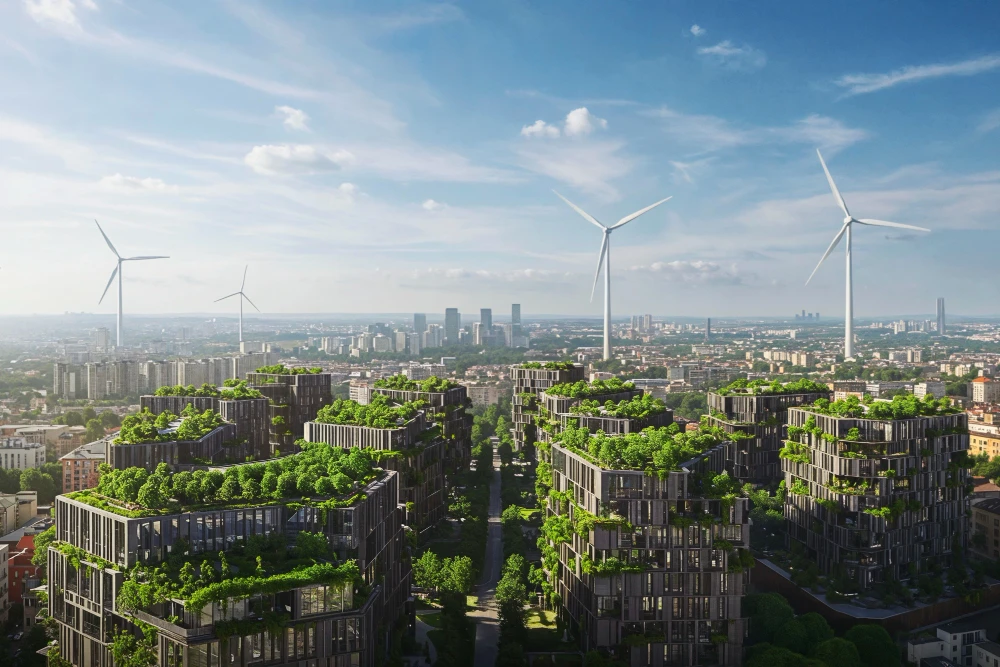
Renewable Energy Integration in Smart Cities
Can you imagine the consequences if we have continued to rely only on fossil fuels for the next twenty years? According to a study by the IPCC, the devastation caused by environmental deterioration will determine the state of our world in the next 20 years. The UNFCCC agreement has assigned about 198 countries to work together to reduce climate change.
Importance of Renewable Energy in Urban Sustainability
In recent years, integrating renewable energy into smart cities has become increasingly significant to achieve more sustainable urban growth (Mehmood, Yigitcanlar, & Corchado, 2024). The rapid population growth is increasing the demand for energy resources. Additionally, relying on renewable energy sources will significantly reduce pollution for future generations due to the urgent need to cut carbon emissions and limit environmental effects (Alharthi, Hanif, & Alamoudi, 2022).
Types of Renewable Energy and Smart Technologies
Waterpower, sun, wind, and biomass energy are the primary types of renewable energy sources. Additionally, the quantity of electricity that may be generated from these resources depends on their availability in each geographic area. For instance, the largest renewable energy source is waterpower, which produces 55% of the world's renewable electricity (Demirbas, 2009). It can be managed by utilizing contemporary technologies that enhance power distribution and energy utilization, such as smart grids, energy storage systems, and Internet of Things devices.
Vision of Sustainable Smart City Living
All you need do is wake up to a refreshing wind, ride your electric car slowly through your green spaces on your way to your smart, environmentally friendly office, and spend time with your neighbours beside the vertical farms that sustain your small city. Everyone dreams of living a lifestyle free of carbon footprint activities.
Global Examples of Smart Sustainable Cities
Currently, over 100 sustainable cities have been established in various countries, such as Copenhagen, Norway, and London, UK. As the world's greenest smart city, Singapore leads the way in Southeast Asia. Their clean environment and efficient transit networks help in such projects (Shafiullah et al., 2022). Furthermore, because of their dedication to green building techniques, environmental laws, and the preservation of natural regions, the inhabitants have made sustainability an essential aspect of daily life. To ensure a bright future for every person, Singapore's approach emphasizes on incorporating sustainable practices into every part of its urban development, from energy consumption to water management. Their Green Plan for 2030 calls for drastically cutting emissions by adding 50% more green area, 30% less trash production, and increasing solar energy capacity to power 350,000 households.
UAE’s Leadership in Smart Green Cities
United Arab Emirates is recognized as the leader in the MENA region for intelligent green cities (AL-Saadi & Abdullah, 2025), showing the commitment to converting to renewable energy sources and creating a sustainable environment through several urban living projects like Masdar City. As part of its innovative efforts to reduce carbon emissions by 50%, Masdar is using electric autonomous pods.
Future Outlook of Emission-Free Urban Living
It is eventually projected that by 2050, seventy percent of the world's population will live emission-free. With the advent of smart technologies and renewable energy, urban life is becoming more and more connected to the vision of a cleaner, greener planet. Meanwhile, we are laying the groundwork for a period when carbon-free daily activities will be the norm and eco-friendly cities will flourish.
References:
- AL-Saadi, M. A. A., & Abdullah, A. S. (2025). Smart growth and urban sustainability in the UAE: a mixed-method analysis. Quality & Quantity, 1-22.
- Alharthi, M., Hanif, I., & Alamoudi, H. (2022). Impact of environmental pollution on human health and financial status of households in MENA countries: Future of using renewable energy to eliminate the environmental pollution. Renewable Energy, 190, 338-346.
- Demirbas, A. (2009). Global renewable energy projections. Energy Sources, Part B, 4(2), 212-224.
- Mehmood, R., Yigitcanlar, T., & Corchado, J. M. (2024). Smart technologies for sustainable urban and regional development. Sustainability, 16(3), 1171.
- Shafiullah, M., Rahman, S., Imteyaz, B., Aroua, M. K., Hossain, M. I., & Rahman, S. M. (2022). Review of smart city energy modeling in Southeast Asia. Smart Cities, 6(1), 72-99.