
Knowledge Update
Horizon University College UAE – Essential Insights
Knowledge update and Industry update at Horizon University College (HUC) is an online platform for communicating knowledge with HUC stakeholders, industry, and the outside world about the current trends of business development, technology, and social changes. The platform helps in branding HUC as a leading institution of updated knowledge base and in encouraging faculties, students, and others to create and contribute under different streams of domain and application. The platform also acts as a catalyst for learning and sharing knowledge in various areas.
Dr. Ghaseb N. Makhadmeh
From Different Corners
Abstract Silica nanoparticles (SiNPs) have gained significant attention in nanomedicine due to their tunable size, stability, and biocompatibility. Among the many factors influencing their performance in drug delivery, particle size is one of the most critical, as it affects biodistribution, cellular uptake, and therapeutic efficiency. This article reviews the key synthesis parameters that govern nanoparticle size, including precursor concentration, catalyst type, solvent composition, temperature, and reaction time.
Dr. Kakul Agha
From Different Corners
At Horizon University College, we understand that Artificial Intelligence (AI) is increasingly transforming higher education, redefining how students acquire knowledge, develop skills, and engage with academic content. For our HRM Major, integration of AI tools offers both opportunities and challenges (Jay, 2025).

Dr. Muhammad Adnan Khan
From Different Corners
Robotics has emerged as one of the most transformative technologies of the 21st century, redefining how we live, work, and interact with our environment. From healthcare and education to industry and personal life, robotics has become an indispensable part of modern society. This article explores the significant role robotics plays in our lives, highlighting its applications, benefits, and challenges.

Dr. Ahmad Khasawneh
From Different Corners
The Internet of Underwater Things (IoUT) are emerging as a critical technology for applications such as oceanographic monitoring, offshore oilfield exploration, disaster prevention, and military surveillance. These networks, made up of sensor nodes deployed below the surface to collect and transmit data, offer transformative capabilities.

Dr. Sajid Saleem
From Different Corners
Wireless communication networks have grown significantly in recent years, owing to the expanding demand for ultra-fast data rates, dynamic allocation of network resources, and effective management of communication networks. The ease provided by mobility has led to widespread popularity of the cellular and WiFi wireless networks. Machine learning is expected to transform network services and quality of service. In this article, we explore the applications of machine learning technologies for optimization of network operations, performance improvement, and meeting the demands of the network end users.

The Role of Bio-Inspired Optimization Algorithms in Medical Feature Selection and Energy Consumption
Dr. Zenab Elgamal
From Different Corners
The proliferation of high-dimensional data in healthcare and the increasing demand for intelligent energy management in smart homes have necessitated the development of advanced optimization techniques. Bio-inspired optimization algorithms—drawing inspiration from natural behaviors such as hunting, migration, and evolution—have demonstrated remarkable success in solving complex real-world problems. These algorithms are particularly effective in feature selection for medical data and in planning energy usage in renewable-powered smart environments.

Dr. Ahmad Salman
From Different Corners
The exponential growth in data generation over the past decade has radically transformed the field of business analytics. Traditional methods of data analysis, while still useful, are increasingly being augmented or replaced by modern computer science technologies. The shift from descriptive to predictive and prescriptive analytics necessitates the adoption of advanced computational tools.
Dr. Belal Shneikat
From Different Corners
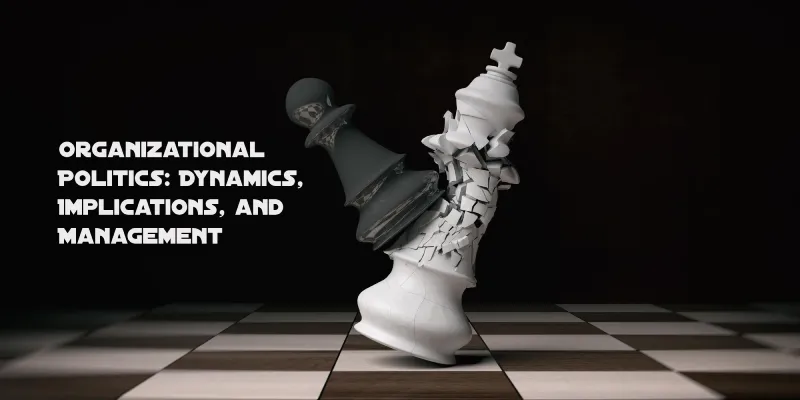
Organizational politics refers to activities undertaken within an organization to acquire, develop, and use power and other resources to obtain one’s preferred outcomes in situations of uncertainty or conflict. It encompasses behaviors that are not part of an individual's formal role but are used to influence decision-making processes, often driven by self-interest. While organizational politics is sometimes seen in a negative light, it is a complex phenomenon that can yield both positive and negative outcomes depending on how it is practiced and perceived.

Dr. Hamza Alrababah
From Different Corners
The rapid advancement of artificial intelligence (AI) has led to the development of sophisticated large language models (LLMs) that are transforming industries, education, and human-computer interaction. This evolution has progressed through multiple generations of AI models, starting with early rule-based systems, followed by statistical models, deep learning-based transformers, and now highly advanced models like OpenAI’s ChatGPT, DeepSeek’s DeepSeek-V3, and Alibaba’s Qwen. While ChatGPT has dominated the conversational AI space, emerging models such as DeepSeek and Qwen offer competitive alternatives with open-weight architectures and specialized multilingual capabilities. This paper provides an overview of the evolution of AI language models, their technical distinctions, potential applications, and future research directions toward next-generation AI systems.

Dr. Aseel Khaleel
From Different Corners
In the dynamic field of English literature and criticism, the study of the contemporary novel remains one of the most fertile grounds for academic inquiry. As we move further into the 21st century, novelists continue to challenge the boundaries of genre, narrative structure, and thematic focus. Scholars must stay updated with these literary shifts, both as a matter of intellectual responsibility and critical engagement.